
Volume 78 Number 4, 2000
Purchasing Cooperatives for Small Employers:
Performance and Prospects
ELLIOT K. WICKS and MARK A. HALL
Economic and Social Research Institute; Wake Forest University
 n the early 1990s, a number of forces converged
to create a new vehicle for small employers to jointly purchase health
insurance (Wicks, Curtis, and Haugh 1993; Curtis and Haugh 1996;
U.S. General Accounting Office 2000; U.S. General Accounting Office
1994; Greely 1995; Miller 1994). Known as health insurance purchasing
cooperatives (HIPCs), these differ from the more common private
association plans sponsored by trade and professional groups. HIPCs are
nonprofit or governmental entities that are willing to accept all small
employers and that offer individual employees a choice of several in-dependent
health plans. The potential benefits of HIPCs made them
popular with lawmakers across the political spectrum. Purchasing co-operatives
first received widespread attention when they were included
in President Bush's health care reform proposal, introduced during the
1992 election campaign. The proposal called for the creation of Health
Insurance Networks," which were based on the success of the Cleveland
Council of Smaller Enterprises (COSE). At about the same time, a number
of states passed legislation that either established HIPC-like entities or
enabled them to operate. The culmination of this interest was President
Clinton's 1993 national health reform proposal, which made HIPC-like
entities, called Alliances," the vehicle for health coverage purchasing
for all but the very largest employers.
n the early 1990s, a number of forces converged
to create a new vehicle for small employers to jointly purchase health
insurance (Wicks, Curtis, and Haugh 1993; Curtis and Haugh 1996;
U.S. General Accounting Office 2000; U.S. General Accounting Office
1994; Greely 1995; Miller 1994). Known as health insurance purchasing
cooperatives (HIPCs), these differ from the more common private
association plans sponsored by trade and professional groups. HIPCs are
nonprofit or governmental entities that are willing to accept all small
employers and that offer individual employees a choice of several in-dependent
health plans. The potential benefits of HIPCs made them
popular with lawmakers across the political spectrum. Purchasing co-operatives
first received widespread attention when they were included
in President Bush's health care reform proposal, introduced during the
1992 election campaign. The proposal called for the creation of Health
Insurance Networks," which were based on the success of the Cleveland
Council of Smaller Enterprises (COSE). At about the same time, a number
of states passed legislation that either established HIPC-like entities or
enabled them to operate. The culmination of this interest was President
Clinton's 1993 national health reform proposal, which made HIPC-like
entities, called Alliances," the vehicle for health coverage purchasing
for all but the very largest employers.
Despite the resounding rejection of the Clinton reform plan, the purchasing cooperative idea caught hold, and HIPCs were established in about a dozen states (depending on exact definitions), most under government auspices but some from purely private initiatives. The idea continues to flourish in current congressional proposals to legislate HealthMarts" and Association Health Plans," which are based on very similar models (Hall, Wicks, and Lawlor 2000). The idea of having small employers join together to purchase health insurance has great intuitive appeal. Small employers are much less likely to offer coverage than their larger counterparts, and small-firm workers or their dependents account for the majority of uninsured people (Congressional Budget Office 2000). Most small employers lack the resources, the expertise, and the inclination to cope effectively with the complex task of buying health insurance. Moreover, as separate small purchasers, they have no market power to negotiate for a better deal as large employers do. Having each insurer sell to and service hundreds of individual employers in an area also seems very inefficient. Establishing some way for small employers to purchase collectively seems like an obvious solution to these problems. Many legislators and policy analysts clearly hoped that, by making health insurance more available and affordable, HIPCs could substantially decrease the number of workers without health insurance. Others, including some industry insiders, expected purchasing cooperatives to become a major, and perhaps the dominant, force in the market for small-group insurance. Neither of these expectations has come to pass (Long and Marquis 1999; U.S. General Accounting Office 2000). This article reviews the initial track record of HIPCs to determine why they have not been more successful, to identify the important barriers to their success, and to discover if there are ways to overcome these barriers. It is based on a series of much longer research reports (available at www.esresearch.org and www.phs.wfubmc.edu/insure).
Methodology
Many kinds of pooling organizations assist small businesses in purchasing health care. If pooled purchasing is defined broadly to include trade, professional, or other membership organizations, then 33 percent of employers with fewer than 10 workers and 28 percent of firms with 10 to 49 workers say that they participate in pooled purchasing (Long and Marquis 1999). This study uses a more restrictive definition, however, one that conforms more closely to the concept that many reformers had in mind when the idea of HIPCs gained prominence. Specifically, this study is confined to entities that meet three criteria. (1) They must offer coverage to all small businesses and not impose membership criteria, other than group size. (2) Employers must have a choice of at least two independent, competing health plans. (3) The purchasing entity must at least permit (if not require) employers to allow individual employees to choose different health plans.
Although not defined by these characteristics, HIPCs are usually nonprofit and are typically formed under governmental auspices or are subject to legislatively imposed conditions. HIPCs also typically have a limited range of benefit packages that are presented in a standardized format to facilitate ease of comparison shopping.
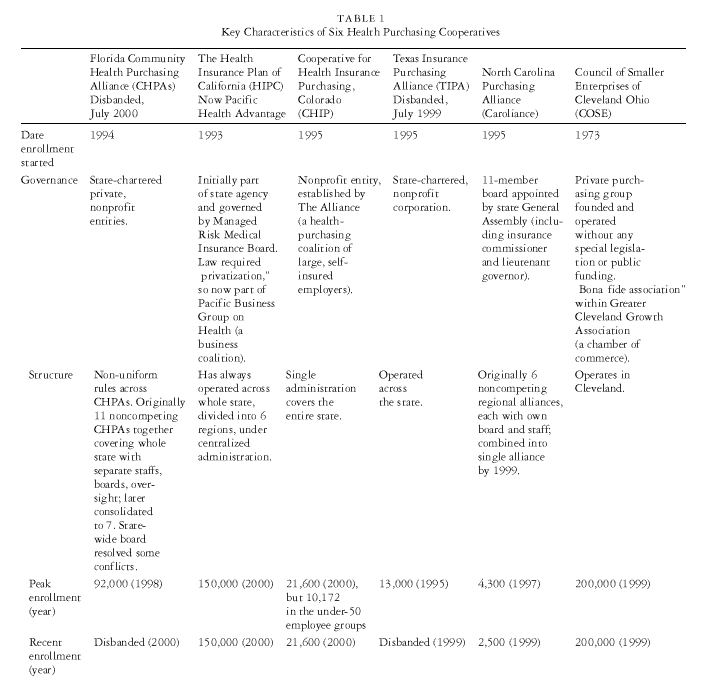
Today there are probably fewer than 20 small-group cooperatives that fit this definition, and they provide coverage for probably no more than a million employees and dependents (Curtis 1999; Institute for Health Policy Solutions 2000). Only a handful of these have had more than 50,000 individuals enrolled. We selected six of these HIPCs to study in depth: the Health Insurance Plan of California (HIPC), the Colorado Alliance, the Texas Insurance Purchasing Alliance (TIPA), the Florida Community Health Purchasing Alliances (CHPAs), Caroliance (in North Carolina), and Cleveland's Council of Smaller Enterprises (COSE). These reflect a range of market conditions, organizational characteristics, and other circumstances. Some were successful; others were faltering. Some started up as a result of government initiative; others had no connection to government. Some were statewide and highly centralized; others were decentralized or limited to a single metropolitan area. Key features are summarized in table 1.
From 1997 through the autumn of 1999, we made site visits to each of these HIPCs and followed up with additional telephone interviews. Some sites we visited twice (Caroliance and COSE) a year apart, others we visited once with telephone follow-up a year later (Colorado and Florida), and the rest we visited once (California and Texas). At each site, we conducted extended structured interviews with HIPC staff and board members, state politicians, insurance agents, health plans, and state insurance regulators. We also interviewed nine health plans which operate nationally or in several different states. At the health plans, we interviewed a mix of actuaries, underwriters, marketing executives, and regulatory compliance officers. All told, more than 100 interviews, most lasting from one to two hours, were conducted with more than 70 individuals. In addition to these six extensive case studies, we conducted more limited telephone interviews in several other sites, including a newly started HIPC in New York City, a Long Island (New York) HIPC, and the HIPC of the Connecticut Business and Industry Association. (For additional information on the Connecticut cooperative, and for findings from a similar, but more limited study of the California, Florida, North Carolina, and Texas cooperatives, see U.S. General Accounting Office 2000.)
This article presents the results of this investigation in the format of a public policy analysis rather than in the traditional scientific format. Accordingly, we alternate between facts, opinions, and observations gathered through our interviews and case studies, and our own analysis and interpretation of these findings. This discussion is organized into three main sections: measures of the HIPCs' success or failure, structural and operational impediments to success, and interest-group resistance. Finally, we draw conclusions about whether and how HIPCs might be improved and suggest lessons for other types of pooled purchasing arrangements.
Measures of Success or Failure
If measured in terms of market prominence, small-employer purchasing arrangements have been both less common and less successful than many of the early proponents hoped. The HIPC in California, with about 150,000 enrollees, continues to experience modest growth and has a large enough enrollment to make continued success seem likely. COSE remains steady and strong. The Colorado Alliance remains small but continues to experience moderate growth. On the other hand, the Texas HIPC closed its doors in mid-1999. North Carolina's HIPC has been struggling for years, but continues to operate. Florida's CHPAs reached a peak enrollment of 92,000 in 1998, but during the next year and a half most health plans pulled out and enrollment dropped precipitously. As a result, the CHPAs decided to cease operations in the spring of 2000. Growth and total size are only two ways to measure performance and judge success, however. In this section, we also consider whether HIPCs have increased access for people who are uninsured or in underserved portions of the market, created employee choice, offered new or different products, reduced prices, or had a positive competitive impact on the market.
Enrollment and Market Share
Proponents of HIPCs hoped that they would account for at least 10 percent to 20 percent of the small-group market at some point, but typical market shares are far below that. In California and Florida, which had the largest total enrollments, the HIPCs accounted for less than 5 percent of the small-group market at their peak enrollment. There are exceptions, however: COSE dominates the small-group market in Cleveland (though precise market-share figures are not available). Of course, market share is not the only measure of market power. The California HIPC's enrollment of approximately 150,000 people is only about 2 percent to 3 percent of the total small-group market, but that number still represents a higher enrollment than those of all but the very largest of the large groups. In a competitive market, health plans are still likely to see a group" of that size and even smaller as business worth competing for. It may also be premature to judge HIPCs' ability to attract enrollment. The market-building process may take longer than expected. It is important to remember that for the most part, HIPCs grow by taking business away from health plans' direct sales. A new HIPC faces the same marketing challenge as a new insurer: success is unlikely to occur quickly, and it will not be automatic even if the HIPC offers a superior product.
Increased Access for Underserved Market Segments
There is no strong evidence that HIPCs have had a major impact on the number of people who are uninsured. Precise documentation is usually not available, but the consensus is that most, but not all, HIPCs attract about the same proportion of previously uninsured people as the small-group market does as a whole. For example, in California, the proportion of previously uninsured groups in the HIPC was about 20 percent, which is typical for small-group markets generally. In the Colorado Alliance in the early years, between 17 percent and 20 percent of enrolled employers did not previously have health coverage, compared to 26 percent for the small-group market as a whole (Hall and Wicks 1998). The two HIPCs that seemed to attract more uninsured groups than was typical for insurers in their areas Texas (50 percent compared to 17 percent) and North Carolina (50 percent compared to 20 percent) also attracted a disproportionate number of high-risk groups, which created problems for them.
In spite of what some politicians hoped, it was unrealistic to think that HIPCs could substantially reduce the number of uninsured people; in fact, this was not the expectation of many proponents. Most people who have studied the problem agree that large numbers will remain uninsured until the cost of coverage is reduced by much more than is possible through the kinds of reform represented by pooled purchasing arrangements (see, e.g., Pauly and Herring 1999).
Some HIPCs note that they serve a segment of the market that otherwise would have a difficult time finding affordable coverage. A number of HIPCs especially those in Florida, Colorado, and North Carolina attract disproportionate shares of very small groups, those with five or fewer employees, including groups of one. HIPCs believe that without their presence, many of these firms would remain without insurance because health plans generally view them as high risk and would make little effort to insure them. However, small-group reform laws enacted at the same time that HIPCs were created require that insurers sell to these groups at the same rates as larger small groups, and other evaluations indicate that these laws have been successful in that regard (e.g., Richardson and Hall 2000). Therefore, if they are persistent enough, most of these microgroups" that are willing to purchase are likely to find coverage elsewhere in the absence of HIPCs. Agents explained that these microgroups tend to gravitate to HIPCs for several reasons: some insurers resist such small groups; the eligibility rules in HIPCs are somewhat more lenient (e.g., in determining what constitutes a legitimate business); and HIPCs provide quick premium quotations and well-packaged information.
In this end of the market, HIPCs have clearly increased coverage options for the self-employed, or so-called groups of one. Federal law requires that insurers offer all of their coverage options on a guaranteed-issue basis only to groups of two or more. Therefore, in some states, such as North Carolina, HIPCs are the only place where groups of one are guaranteed comprehensive coverage at group rates (Lawlor and Hall 2000).
Increased Employee Choice
Even if HIPCs do not succeed in capturing a sizable portion of the market or enrolling large numbers of uninsured people, they can potentially point to success in offering new products or purchasing options that are neglected elsewhere in the market. The principal such innovation that they offer is allowing small-firm workers to choose among competing health plans. About two-thirds of workers now have a choice of health plans, but fewer than 10 percent of small employers who offer insurance offer more than one plan (Gabel 1999). Employee choice usually is not a viable option for small businesses because of the administrative burdens of offering multiple plans. Also, health plans usually insist on enrolling a minimum number or proportion of employees before agreeing to offer coverage to an employer a requirement that is allowed by guaranteed-issue laws. Therefore, the employee-choice feature of HIPCs is a major innovation. Most HIPCs at least nominally require employers to offer individual choice to employees. All allow this option at no extra cost for employers who wish to take advantage of it.
Many of the subjects we interviewed indicated that this unique feature is important in attracting small employers to HIPCs and clearly benefits employees. Agents report that the employee-choice feature is important in very small firms, where the employer has a close relationship with the employees and especially cares about their reaction to the coverage decisions. Employee choice can also be attractive to slightly larger firms because of the difficulty of choosing one plan that will please 15 to 20 employees (Wicks and Kurtz 1998). The ability to offer choice is especially important when an employer seeks to gain the cost advantages of moving to managed care without alienating employees by forcing them all into one plan. If workers are able to choose their own plan, they are more likely to tolerate some of the negative features of managed care. In addition, some subjects noted that employers can offer a choice of plans while still limiting their financial liability: they can tie their premium contribution to the least costly plan, while letting employees choose more expensive plans if they wish to pay the difference. Adopting the strategy of a fixed-dollar contribution can also make it easier for employers to ask employees to absorb the cost of premium increases that plans might impose.
Despite the apparent advantages of employee choice, the feature is not sufficient to persuade large numbers of small employers to choose HIPC coverage. One reason may be that employee choice has not been as important as analysts first thought for making the transition to managed care. When the HIPC idea was first proposed, observers of the health system generally believed that the managed care market would be characterized by competition among a number of health plans with mutually exclusive sets of providers and distinct plan philosophies and types of utilization control. But the market evolved differently. Health plans have generally sought to have very broad overlapping provider net-works, which allows people to retain their relationships with providers when they change health plans. Also, plans are more similar in their philosophy, control of utilization, and other aspects than many analysts expected.
It is also true that many firms that select HIPC coverage have not taken advantage of the employee-choice feature. Caroliance is an extreme case: fewer than 5 percent of its groups enroll with more than one plan. There are several explanations for the relatively high proportion of firms with employees in only one health plan.
The first is group size. To the extent (noted above) that HIPCs attract a large proportion of self-employed workers, the one employee will be in a single plan, of course; the employer's choice is the employee's choice. For example, more than 35 percent of employers in the Colorado Alliance are one-life groups. And the average group size is small in many HIPCs for example, just over 4 in Colorado and North Carolina; and even in California, with the largest average group size, the number is about 10. This means that every HIPC has large numbers of employers with only 2 or 3 employees, and it not surprising that all employees in such firms often enroll in the same plan.
Second, several HIPCs we studied struggled to maintain participation by health plans (for reasons explained below) and so were unable to offer as much choice as they hoped to at first. Both Caroliance and TIPA operated for several years with only one insurer willing to offer coverage in many parts of the state.
Third, when HIPCs do not require employee choice but instead allow employers to decide whether to offer it, some employers elect not to do so. Some may place a low value on choice for employees because, as the firm's decision maker, the owners can select the plan for the firm that they prefer for their own care. Also, some employers continue to view a choice of plans as an administrative burden or a potential source of inequity among workers for instance, when plans have different rules regarding covered expenses, which employees may perceive as inconsistent decisions.
New and Different Products
For the most part, HIPCs offer only HMO coverage. When HIPCs were first conceived, it was rare for small employers to choose HMO cover-age, and so this feature was viewed as a positive innovation. However, managed care products now dominate the small-group market (Jensen et al. 1997; Morrisey and Jensen 1997), due in part to small-group market reforms (Hall 2000a). Therefore, this feature is no longer distinctive. Rather, the absence of indemnity, PPO (preferred provider organization), or POS (point of service) options through HIPCs have hindered their ability to attract employers. Health plans have been unwilling to offer these options through HIPCs because they fear that when employees can choose from multiple plans, higher-risk individuals will choose a non-HMO option over an HMO because of the greater choice of specialists available. Therefore, insurers view indemnity, PPO, or POS structures as a source of adverse selection. Several HIPCs we studied, such as those in California and Colorado, offered one of these options at first but then were forced to discontinue them because no health plans were willing to offer such coverage. However, other HIPCs continue to offer these options, and in some, such as North Carolina, these plan designs attract most of the enrollment.
The effects of adverse selection against indemnity, PPO, or POS options could be partially offset by implementing a risk-adjustment system that compensates health plans that enroll a disproportionate number of higher-risk individuals. Only the California HIPC has a risk-adjustment mechanism in place, but it has proved inadequate to induce health plans to continue offering PPO coverage.
We also heard some complaints that HIPCs offered too few benefit options, particularly when they first began operations. Some HIPCs reported that their initial offerings did not provide sufficient choice, or that benefits were too limited or too generous to appeal to sufficient numbers of employers. This is something of a dilemma for HIPCs: to make it easy for consumers to compare the relative value of plans and to avoid administrative complexities, HIPCs have favored highly standardized benefit options with relatively few variations; but plans that sell coverage outside the HIPCs have greater flexibility to tailor benefits to particular employers' needs.
Lower Prices
Initially, several HIPCs for example, in California and in Cleveland were able to offer premiums that were somewhat lower than what small employers would pay for comparable coverage purchased directly from health plans. In California, at least, the price advantage has disappeared. Some HIPCs, notably COSE, continue to claim a significant price advantage, but accurate comparisons of inside and outside prices are difficult to make partly because the benefit packages differ and partly because HIPC prices include a component to cover the HIPC's administrative costs, typically 2 percent to 3 percent, which is not included in non-HIPC premiums. A recent General Accounting Office market test in two of the states we studied found that the HIPC price in California was about 7 percent higher than for similar coverage from a non-HIPC insurer, and prices were identical in Florida (U.S. General Accounting Office 2000).
Interview subjects explained several reasons for the lack of a price advantage. Health plans believed initially that HIPCs might account for a large market share, and so at first they offered favorable prices to avoid losing a major share of business. Once they saw that HIPCs were not a major source of business, they decided to keep HIPC prices in line with their outside prices to avoid competing with themselves. Health plans also say that the administrative savings that were initially promised or expected and which presumably would have been passed on in lower premiums did not materialize. Finally, subjects noted that the small-group market was much more price competitive in the mid-1990s than in the late 1980s, so there was less room to give discounts to HIPCs than might have existed when they were first conceived. In particular, health plans have lowered agent commissions, which are a major component of overhead costs.
The failure to achieve administrative savings deserves special attention, since this is one of the primary advantages expected of HIPCs. Early proponents noted that the administrative component of premiums was much higher for small groups than for large groups and so expected that collective purchasing could achieve significant savings. The reality have reduced their administrative costs across the board as the small-group market became more competitive, so there is less fat" for HIPCs to cut.
Second, HIPCs' relatively low enrollment has prevented the realization of some economies of scale. Importantly, insurers have found that it is not cost-effective to modify their administrative apparatus for the low volume of sales they get from the HIPC, so they often end up duplicating the billing, accounting, and record-keeping tasks performed by the centralized HIPC administrator. Another reason insurers duplicate these functions is that they often do not trust the administrator to be timely or accurate for example, to match eligibility with premiums to make sure that coverage is promptly suspended when someone defaults on payment for premiums. Such distrust might dissipate over time if the experience is positive, as seems to be the case in California. A factor contributing to this lack of trust is that these administrative functions are sometimes contracted out to a health plan that competes with other plans in the HIPC, and sometimes this health plan is also the largest one in the HIPC. If HIPC sales accounted for a large market share, health plans might find it worthwhile to change their administrative functions; and with time, they might learn to trust an effective administrator.
HIPCs have also found that centralizing administrative functions has not produced the economies of scale expected. Partly, this is again a reflection of lower volume than expected, but it also reflects the reality that HIPCs probably will never achieve the same efficiencies as large employers. It is inherently more expensive to serve many firms with few employees than to serve one firm employing many workers, since each firm requires separate accounting, benefit selection, contract formation, and so forth. In addition, large firms employ internal staff to manage employee benefits. Thus, they internalize the cost for some of the functions that HIPCs or insurance agents perform for small employers, who have these costs built into their premiums. Finally, HIPCs have some-times taken on administrative functions that did not exist before for example, running a risk-adjustment mechanism. Thus, with respect to reduced administrative costs as a source for lower premiums for HIPC, any savings are likely to remain small as long as HIPCs account for a relatively small share of the small-group market. In sum, there is little chance that HIPCs will be able to offer significantly lower prices than are available outside. In part, this is because the small-group market has become competitive; indeed, the presence of a HIPC may have speeded up the evolution to a more competitive market in some states. This picture could change, however, if HIPCs were to account for a large share of the total small-group market, as discussed below. Because they form a large risk pool, HIPCs also can probably offer small employers greater premium stability than they could achieve on their own, and that is likely to be attractive.
A Positive Competitive Effect on the Market as a Whole
Even if HIPCs do not offer distinctly lower rates than the rest of the market, they may have had a positive effect on competition overall, so that the competitive environment across the market is better than if HIPCs were not present (Buchmueller 1997). This possibility is difficult to gauge because so many other changes were occurring at the time HIPCs were entering the market. No health plan administrators we interviewed said their plan made any particular competitive changes in response to HIPCs, but other interviewees speculate that some market changes or dynamics could well be a reaction to HIPC products. For instance, some people associated with HIPCs suggested that the ease of obtaining price quotations for standardized products helps to promote vigorous price competition, since consumers can quickly and easily compare prices for essentially identical products. Some HIPC staffers postulated that when it became clear that employers found the employee-choice model attractive, health plans responded by developing their own multiple-choice products for example, allowing individual employees to choose from HMO, PPO, and POS coverage options.
However, few subjects believed that HIPCs had a major impact on market competition, primarily because of their small market shares. Most subjects attributed changes in the market either to the rapid rise of managed care or to the full set of small-group reform laws enacted in the early 1990s.
The Context and Criteria for Measuring Success
Although HIPCs have not been as successful as their advocates hoped, it is important to recognize that they have also not been the failure that some critics, especially health insurers, claimed they would be. They have proved that it is possible to offer individual employees a choice of health plans without running up prohibitively high administrative costs. They have demonstrated that employee choice does not inevitably lead to major adverse selection problems among the health plans offering coverage through the HIPC. They have shown that even in a market where participation is voluntary and no subsidies are available to small employers, HIPCs can meet the health coverage needs of a significant number of small employers and their employees.
Nevertheless, in view of their modest record, it would be easy to say that the HIPC model is fatally flawed and that the creators of the concept were mistaken in most of their central assumptions. But such a judgment would be too harsh. The model's more sophisticated proponents never believed that HIPCs alone were the solution to providing affordable health coverage for small employers. They understood that even under ideal circumstances, HIPCs could not produce sufficient premium reductions to attract large numbers of uninsured people. They knew that economies of scale in administration and the ability to negotiate favorable rates required a large scale. They recognized that risk pooling that would make premiums more affordable for higher-risk firms could not be achieved by HIPCs on their own, but had to be created by insurance reform laws that applied to all small-group insurers.
These proponents were advocating for the HIPC model at a time when comprehensive national health reform seemed likely. They saw HIPCs as part of a larger reform package that would include key ingredients to make them viable and to make the objectives set out for them realistic. In addition to changes in laws regulating the small-group insurance market, reformers were expecting mandates to ensure that everyone had health coverage and were anticipating that the federal government would provide subsidies to make coverage affordable for all Americans. It was commonly assumed that all employers would be required to pay for some portion of coverage and that all small employers, and perhaps larger employers as well, would be required to purchase coverage through something like a HIPC. Because comprehensive health reform failed, none of these expectations was realized. The consequences for HIPC success should not have been a surprise. As one of the founders of a successful HIPC said, it was like having a recipe for a gourmet dish and then leaving out many of the key ingredients. The resulting product was not very successful.
Meanwhile, the more incremental reforms that were enacted made the market operate better and more fairly, accomplishing much of what reformers thought HIPCs would do. Small-group reforms have helped to make coverage more stable and, for higher-risk groups, more affordable and accessible (Hall 1998). These successes have probably reduced the pressure to develop or use HIPC-like structures, though only HIPCs can provide a choice of health plans to individual employees.
Findings and Analysis: Structural or Operational Impediments to Success
We now consider a variety of explanations for why HIPCs were not more successful. Identifying and evaluating various impediments to success may help in devising remedies that will improve HIPCs' performance. This section focuses on structural or operational impediments; the following section examines interest-group opposition.
Conflicted Conceptions of Role
For the most part, HIPCs have been started not by entrepreneurs with a typical business orientation but by people with a social mission the desire to improve coverage options for small employers. They have generally sought to make coverage as widely available as possible and are committed to broadening risk-sharing and including high-risk groups in the risk pool. They hope to encourage health plans to focus on improving both efficiency of delivery and quality of care. In some instances, this dedication to achieving desirable social ends appears to have contributed to policy decisions that hurt the HIPCs' ability to compete with the outside market. In particular, several HIPCs were damaged by policies that made them victims of adverse selection.
California's rating law, for example, permits health plans to vary rates by ±10 percent for health status, but the HIPC chose not to use health status as a rating factor. Several interview subjects suggested that this contributed to some adverse selection, although the effects were not severe. In Texas, the state law did not initially require guaranteed issue of any products, so TIPA did medical underwriting to accept or reject applicants. But TIPA used modified community rating to establish rates, whereas the outside market had greater rate variation. TIPAexperienced some adverse selection as a result, although our informants differed about how severe the problem was. In North Carolina, Caroliance offered higher-risk groups fairly comprehensive coverage on a guaranteed-issue basis (though with medically underwritten rates) when no outside insurer did so. As a result, higher-risk groups seeking comprehensive coverage flocked to the HIPC (Lawlor and Hall 2000). Several HIPCs we studied were more willing to accept newly formed businesses than were insurers operating outside, thus making them more vulnerable to selling coverage to firms that may have been formed partly for the purpose of purchasing insurance. In Florida and North Carolina, the HIPCs made special efforts to serve very small businesses (five or fewer employees) because they recognized that insurers often sought to avoid these groups because they were viewed as being higher-risk groups. The HIPCs' success in attracting disproportionate numbers of these microgroups made insurers even more reluctant to participate with the HIPC because of their fears about adverse selection.
The lesson to be drawn from this experience is that HIPC designers and managers have to reconcile their commitment to a social mission with the realities of the marketplace. It is hard to succeed if the HIPC's criteria for selecting and rating applicants are more permissive than those used by insurers in the outside market; the result will be adverse selection and consequent high medical claims costs. Health plans are likely to respond in one of two ways. Where the law permits, they may raise the premiums for the HIPC business to offset the higher claims costs, thereby making the HIPC noncompetitive for average- or low-risk businesses. Or, if the law requires uniform rating inside and outside the HIPC, health plans may withdraw from the HIPC rather than take a loss on that business.
Finally, the sense of mission that many HIPC leaders brought to their job often made them think of health plans as adversaries: they thought of the HIPC as being on one side of the bargaining table as the purchaser for small employers with the health plans on the other side as sellers. Although this is a valid attitude, hindsight suggests that some HIPCs could have been more sensitive to the concerns and needs of health plans. Occasionally, HIPCs brought expectations or made demands that health plans were unable or unwilling to meet because they lacked an understanding about the way insurers operate. HIPCs sometimes also overestimated their bargaining clout with health plans.
Inconsistent Market Reform Rules
In some instances, HIPCs were placed at a competitive disadvantage by restrictions in the law (Wicks 1993). In North Carolina, for example, the small-group reform law required that only the basic and standard benefit plans be sold on a guaranteed-issue basis. This meant that these less comprehensive plans were the only option for high-risk groups. Because the HIPC initially was allowed to offer only the basic and standard plans, it attracted primarily higher-risk groups; the groups with better risk profiles bought more comprehensive coverage, which was not available from the HIPC (Lawlor and Hall 2000). Some agents told us the situation was exacerbated by the behavior of health plans: by not actively marketing the basic and standard plans and also discouraging agents from bringing that business to them, they effectively channeled high-risk groups to the HIPC. Although the HIPC was later authorized to sell more comprehensive select" plans, it had already established a reputation as the insurer of last resort." Moreover, even though the HIPC select plans were medically underwritten, they were still the only comprehensive plans available on a guaranteed-issue basis prior to the Health Insurance Portability and Accountability Act (HIPAA). Thus, once again, the HIPC drew a disproportionate number of higher-risk groups.
A different kind of reform rule has limited HIPCs' ability to negotiate prices. In most states (California is an exception), community rating laws do not permit discounts for the medical expense component of premiums, only for savings in administrative costs. Discounts for lower medical claims expenses are inconsistent with community rating if the lower claims are attributable to the favorable health status of the covered population. But HIPC proponents argue that prohibiting all medical expense discounts undermines any incentive for HIPCs to promote unique cost-containment initiatives that would save by improving efficiency rather than by favorable risk selection. They further argue that the potential for risk selection is greatly reduced by the requirement that HIPCs accept all small-group applicants without regard to risk. They conclude that HIPCs should be considered as large groups and have the same bargaining opportunities as large employers. So far, these arguments have not proved persuasive to most state officials. This limitation on discounts created a problem for the Colorado HIPC, which originally negotiated a multiyear cap on premium rates as a cost-control measure. The HIPC's cost-containment provision was voided when the law was interpreted to allow price negotiations over only the administrative component of premiums.
However, many states allow some rating flexibility, including for health status variation, within rating bands" (Hall 2000b). In those states, HIPCs may offer somewhat lower rates if they enroll groups with lower-than-average risks. In general, however, they probably attract groups with somewhat higher, not lower, risks. Therefore, if community rating laws have had any impact, in most HIPCs it would be helping to keep premiums more affordable. That is, because the part of the premium attributable to the medical component must be the same inside and outside the HIPC, the community-rating requirement helps to keep the HIPC's premium more or less in line with the market as a whole even when it draws higher-risk groups. But when that happens, the HIPC business is unattractive to health plans, a reason some gave for withdrawing.
Finally, some HIPCs are unable to bargain over any component of prices. Florida is the leading example. There, HIPCs did not hold the contract with the health plans employers did. And Florida HIPCs had to allow any willing health plan to participate. Thus, they had no influence at all on price, and could not exclude health plans. Nor did they have control over the commission agents receive for HIPC sales. The amounts were determined entirely by the health plans, which paid the commissions. This distances the agents from HIPCs and reduces the HIPCs' opportunities to establish good relationships and create loyalties with agents.
Some of our informants questioned whether prohibitions or limitations on the ability to negotiate prices with health plans really constitute a disadvantage. They observed that when HIPCs have a small market share they just do not have much leverage to be effective bargainers. Moreover, even in California, where the HIPC has bargaining flexibility and an enrollment of about 150,000, current prices are not significantly different from the outside market which suggests that bargaining is not very effective, though it may have been initially.
Structural and Organizational Characteristics
With the exception of COSE, all the HIPCs we examined in detail were initiated by the government, either as a governmental agency or as a nonprofit organization that received governmental backing or subsidies. While this link with the government gave HIPCs some initial credibility, political clout, and, in most cases, some start-up funding, our informants generally agreed that the association hurts more than it helps because small businesses, and especially insurance agents, tend to be suspicious of government. Many informants also observed that the inflexibility created by extensive government oversight makes it hard for HIPCs to adapt quickly to changing circumstances. Frequently, they cannot change operating policies, once such a change is deemed desirable, without having the law changed. This not only takes considerable time and effort, it allows interest groups to use the political apparatus to thwart the process. A wholly private organization that does not depend upon state law to define its role can more easily test out and adopt new strategies. Two other HIPCs those in Florida and North Carolina experienced another structural problem: too many HIPC regions were established in the state (11 in Florida and 6 in North Carolina). Some knowledgeable people in Florida defended multiple HIPCs, each with a local board, as helping to create local awareness and responsiveness. But the consensus was that the large number of HIPCs caused difficulty in getting agreement on policies, duplication of functions, rivalries among HIPC leaders, extra complications for health plans, and wasteful dissipation of resources that could have been better targeted to maximize enrollment. The validity of these arguments is demonstrated by the substantial consolidation that occurred in both states. Some of the HIPCs in Florida combined to reduce the number from 11 to 7, while the 6 in North Carolina were eventually consolidated into a single statewide entity. None of the states that had only one structure including geographically large and diverse California seemed to be at a disadvantage for having a single, centralized organization.
Leadership, Administration, and Start-up Funding
Leadership and staffing difficulties were evident in some HIPCs, but they do not seem to have been a major cause of problems. HIPC leaders and boards were sometimes inexperienced in the ways of health insurance and thus had unrealistic expectations or were slow to pick up on emerging problems. Our interview subjects expressed these criticisms to one degree or another in Texas, Florida, and North Carolina, for example. But, overall, their criticisms of HIPC leaders were relatively mild, and in some instances, notably California, they praised the leadership as being forceful, effective, and farsighted.
Likewise, the administration of HIPC functions did not pose severe problems. The administrators of some plans encountered initial rough spots, but they were generally ironed out relatively quickly. In Texas, the decision to have one of the participating health plans, Blue Cross, also serve as the HIPC's administrator made the competing plans suspicious. They thought Blue Cross might gain some advantage as a result of its position as administrator. Similar concerns were expressed in Florida, where the participating health plans were concerned that the administrator could also become their rival.
Finally, interview subjects commented on the inadequacy of start-up funding, which varied widely among these HIPCs, from $250,000 to $8 million. Start-up funding is critical not only to establish effective administration but, more importantly, to get the word out to potential purchasers. Most small employers do not readily think of HIPC coverage as an option, and agents may be reluctant to call this option to employers' attention, for reasons discussed below. Some HIPC informants (at the Texas TIPA, for example) said that their marketing budget was far less than needed to make them viable competitors. Other HIPC informants (in Colorado, for example) did not attribute their difficulties in attracting enrollment to inadequate advertising and marketing funds.
Findings and Analysis: Interest-Group Opposition or Resistance
The Crucial Role of Health Plans
Health plans have a critical influence on the success of HIPCs. Unless sufficient numbers of quality, name brand" health plans participate initially and then stay on as partners with the HIPC, success is unlikely. Given their inability to offer lower prices, the most important characteristic of HIPCs in attracting small employers is their capacity to offer employees a choice of health plans. If the choice is very limited or does not include at least some of the largest and most prestigious health plans, the HIPC will not be an attractive option to most small employers. Under such circumstances, an employer that chooses HIPC coverage is, in effect, forcing its employees into plans they may not like, which may entail requiring employees to change physicians and other providers, as well. Because the ability to retain their relationship with existing providers is the most important factor in consumers' choice of health plans, employees who have to change providers will be displeased. Similarly, if health plans that participate initially later pull out, employers that remain with the HIPC may be forcing some of their employees to sign up with new plans and new doctors (unless there is extensive overlap of provider networks among plans). Such instability can deter many employers from staying with the HIPC.
HIPCs that opened their doors in the early 1990s were generally encouraged by the health plans' response. Most HIPCs found that major health plans were willing to participate. In Florida, 45 plans signed on as accountable health partners." The California HIPC was able to persuade more than 20 plans to participate. The Colorado Alliance offered a choice of 4 of the 5 major health plans in Colorado. HIPCs in North Carolina, Texas, Connecticut, and most other states found sufficient numbers of willing health plan participants initially so that they were able to offer employers a meaningful selection.
In assessing this early experience, it is important to recall the political context of the times. The idea of pooled purchasing for small employers had real political currency, and was the subject of much debate and analysis. Influential and visible policy analysts like Alain Enthoven and the Jackson Hole Group" were articulate in their support of the concept as part of the theory of managed competition. Politicians were attracted to it, as it presented a way to lower costs and improve choice without spending significant additional tax money. The expectation that HIPC-like entities would be part of President Clinton's national health reform structure made state politicians receptive to the idea of getting there first." Several governors most notably Lawton Chiles in Florida and Ann Richards in Texas were strong supporters of the HIPC concept. During this time, health plans were under attack for not serving small employers well. They were criticized for practicing risk selection for raising prices and doing whatever else they could to avoid selling coverage to small businesses that might employ one or two high-risk workers or otherwise pose higher-than-average risk. On the political defensive and under pressure to help small employers buy affordable coverage, many health plans were willing to participate, even if sometimes reluctantly or unenthusiastically. The expectation that HIPC-like entities might be a major, if not the exclusive, source through which smaller employers would buy coverage led other health plans to participate. Still other health plans particularly newly formed HMOs that were just entering a market and lacked an existing marketing structure and agent force saw the HIPC as a convenient entr´ee. Finally, some health plans felt that they had a social responsibility to participate in an experiment that could offer better service, more affordable prices, and enhanced choice to small employers and their workers. Even under these circumstances, some prominent health plans declined to participate.
The conditions that led health plans to participate changed over the decade of the 1990s. President Clinton's national health reform effort failed. Small-group insurance market reforms which limited rate variation, required insurers to sell to all applicants, and increased portability made the market work better for small employers. Some of the most supportive governors were replaced by successors who, while not opposed to HIPCs, assigned no special priority to the HIPC concept (as in Florida and Texas). These changes reduced the political motivations to participate. Other changes reduced the economic incentives. The prospect that HIPCs would account for a large portion of the smallgroup market was not realized anywhere, so plans concluded that they could market effectively to small groups without joining HIPCs. Perhaps most important, the competition among health plans became so fierce that margins eroded and health plans become intensely concerned with the bottom line. As a result, health plans began to focus on the most profitable portions of their business and drop those lines that were less profitable or had less potential to add to net revenues. The rapid consolidation of health plans during this period exacerbated these trends. The consequences are as expected. Health plans that never liked being part of a HIPC pulled out. Those that were lukewarm supporters or participated only for defensive reasons left as well. Some plans that expected HIPCs to be a major source of business for themselves were disappointed and left, and others realized that they could compete effectively without being in the HIPC because it did not account for a large market share. Those that remained sometimes resisted innovations that were supported by HIPCs but they viewed indifferently (as in Colorado). Of course, not all health plans responded negatively, and a number of HIPCs continue to offer coverage from some of the best-known plans in their area. But the departure of health plans mortally wounded a number of HIPCs for example, in Texas, Florida, and North Carolina. The Texas HIPC went from having as many as 20 participating health plans to only 1 in a period of five years. It shut down shortly thereafter. The number of participating plans in Florida fell from about 35 initially to only 6, so that Florida HIPCs were forced to close their doors. North Carolina lost all but one of its original statewide carriers but remained in operation.
Obviously, HIPCs cannot operate without health plans, but is the problem of health plan participation one of cause or of effect? Do some HIPCs fail to get and keep adequate enrollment because they do not have enough participating plans, or are they unable to attract sufficient numbers of desirable plans because they lack the enrollment to make health plan participation attractive or a competitive necessity? The answer is that both factors are at work. When health plans withdraw, for whatever reason, there are fewer health plan options from which to choose, so HIPCs have a harder time attracting employers. But when enrollment falls off, health plans have less incentive to continue participating. Once the cycle begins, it is hard to stop, as the experience in Texas and Florida illustrates.
Health Plans' Reservations about HIPC Business
Although their attitudes toward HIPCs run the gamut from outright hostility to real support, most health plans have some reservations about participating. Some plans that were initially hostile to the concept saw HIPCs as a threat because, by pooling the purchasing power of many employers, HIPCs potentially give small employers the kind of bargaining clout that large employers bring to the negotiating table when they buy health coverage. HIPCs also force health plans to engage in head-to- head competition: in virtually all cases, participating plans have to offer standardized, identical benefit packages, so consumers can easily and accurately compare prices to determine relative value. Additionally, where HIPCs have the authority to negotiate prices and select a limited number of plans (as in California), plans were initially under strong competitive pressures to lower prices.
Health plans, like most other kinds of businesses, prefer not to be forced into direct price competition (in fact, health plans in Florida successfully opposed giving HIPCs the legislative authority to negotiate prices). One health plan representative illustrated this antipathy to competition very clearly in noting his dislike of the employee-choice provision of HIPCs, which gives every employee the option of easily enrolling in a different health plan at each open enrollment period and continually exposes each employee to coworkers who are enrolled in other plans. These disadvantages" are not present when a health plan enrolls a group outside the HIPC.
Even some health plans that originally were not hostile to HIPCs have been disappointed with aspects of their experience. Marketing to and servicing the small-group market is difficult and expensive for health plans because of the diseconomies of small scale. By centralizing many of the administrative functions, HIPCs promised to reduce those diseconomies and lower the costs to health plans in that market. But, as discussed above, most health plans and HIPCs agree that the promise has not been fulfilled. Most plans still perform many, if not all, of the administrative functions they always performed, for several reasons. First, plans often do not find it worthwhile to change their administrative structures which can be a costly process just to accommodate the small amount of business the HIPC produces. Second, since much of their small-group business is sold outside the HIPC, plans still must retain an administrative apparatus to serve those customers. Third, plans do not always trust the HIPC's administrator and so duplicate some functions to verify its accuracy, as noted earlier.
In the end, many health plans expressed a belief that participation with the HIPC actually adds to their administrative burdens. It requires negotiation with the HIPC, sometimes with staff who lack full knowledge of the health insurance business or who treat health plans as adversaries rather than partners. And it involves conforming to another set of insurance department regulations and exposing the plan to the possibility of violating yet another set of rules, which differ from state to state (a concern of national companies).
Health plans often view participation in HIPCs as exposing themselves to risks they would prefer to avoid. They complain about the employee-choice provision of HIPCs partly for that reason. They say that if they enroll a whole group in the non-HIPC market, they get the good risks along with the bad, thereby spreading out their risk exposure. But employee choice creates the possibility that a plan will attract primarily the higher-risk employees. Plans such as PPOs, which are likely to appeal to less healthy people, have good reason to harbor such fears. But the fact is that virtually all health plans seem to think that they will be the victims of adverse selection (even though if one plan gets a disproportionate share of bad risks, other plans necessarily get a disproportionate share of good risks). For most health plans, the fear of being the victim of adverse selection seems to outweigh the prospect of being the beneficiary of favorable selection.
In some states, health plans acted in ways that almost ensured that HIPCs would get a disproportionate share of high-risk groups. Interview subjects related that some health plans attempted to channel high-risk business to the HIPCs, often by conveying the message to agents that they would not look favorably on agents who sent the health plan bad" risks. One interpretation that subjects offered for such actions is that health plans saw this as a way of ensuring that they could share the risk with other health plans, since with employee choice in HIPCs, the individuals in higher-risk groups might choose coverage from several different plans. A few subjects conjectured that health plans sought to cause the HIPC to fail as a competitor by, in effect, making it a high-risk pool.
In pursuing their social mission to serve employers that would otherwise have difficulty getting access to insurance, HIPCs have sometimes reinforced the health plans' fears. HIPCs have occasionally used ma-keting tactics (as in press releases of the HIPC in North Carolina) that conveyed the message that employers that were unable to find cover-age anywhere else should come to the HIPC. This kind of appeal scared health plans, especially before market reform laws required all carriers to provide their small-group products on a guaranteed-issue basis. Health plans complain most bitterly about the higher-risk profiles of microgroups, which a number of HIPCs (Florida and Colorado, for example) have attracted in large numbers. Health plans say that these groups of up to three employees incur substantially higher medical claims per capita than larger groups. They view these groups as behaving like people in the individual insurance market: plans think that microgroups often buy coverage when someone in the group needs expensive medical care and then drop it after the care is delivered. Turnover among such groups also tends to be very high, which exacerbates the marketing and administrative diseconomies of serving them.
Health plans are normally required to serve microgroups by a state's small-group reform laws rather than by a specific provision related to HIPCs, so plans would legally have to serve such firms even if there were no HIPC. But because these microgroups are often disproportionately concentrated in the HIPC portion of the market, health plans tend to associate the problem with HIPCs. Some HIPCs, as in Florida, have seen it as part of their social mission to reach these very small employers because they have not been well served by the traditional market. The HIPCs' willingness to serve these tiny groups and to give them good service counts as a measure of success for HIPCs, but it counts against them in terms of health plans' worries about adverse selection. Because of their concern about greater exposure to risk from participating in HIPCs, one would expect health plans to urge HIPCs to develop an effective risk-adjustment mechanism. But health plans seldom even mention risk-adjustment as a possible solution to their concerns. Some plans said they have little faith that HIPCs can develop a system that will accurately adjust for risk differences among plans. But it is also important to note that plans generally do not favor mechanisms that involve plan-to-plan transfers. In part that may be because administering the system may require that an outside agency scrutinize the health plans' internal accounting records and other strategically sensitive business in-formation. In any case, only the California HIPC had a risk-adjustment mechanism in place, and it did not provide large-enough transfers to keep PPOs in the system.
Future Health Plan Participation
What are the prospects that health plans will participate with HIPCs in the future? Recent experience is not especially encouraging. Efforts to start a HIPC in Kansas in 1999 were set back because only one plan responded to an invitation to participate. New York City's successful effort to initiate a HIPC in 1999 produced four willing health plan partners, but some prestigious plans declined to take part. Given the intense competition in the current market, health plans even nonprofit plans are likely to continue to participate only if it makes good business sense. Decisions are less likely to reflect a philosophical position or views about social responsibility and are more likely to be based strictly on business considerations. In the absence of strong political pressures, plans are likely to participate only if it is more profitable in the long run to stay in than to get out. If they do not ultimately gain substantial enrollment that they would otherwise not have, or make higher profit margins on the HIPC business, plans are likely to opt out. The fact is that many plans view the HIPC as a competitor. They suspect that they would get the same amount or even a larger amount of business if they do not deal with the HIPC. Without the HIPC, for example, they might enroll the whole group rather than the one or two individuals who might choose their health plan.
This skeptical attitude toward HIPC participation is likely to be especially strong among investor-owned insurers, but even the nonprofit health plans know that they have to be businesslike. Concern for social mission has to be balanced with the need to compete in a fiercely competitive market.
Agent Hostility to HIPCs
One of the original objectives of HIPCs was to make coverage more affordable by reducing administrative costs. Agent commissions, as a major component of administrative costs, were targeted particularly because they represented a significantly higher proportion of per-enrollee premiums for small businesses than for large businesses. Many HIPC proponents held the view that the size of agent commissions was out of proportion to the services provided. Some also believed that it was possible to eliminate agents from the process by having employers buy directly from the HIPC. They determined that HIPCs could perform the same functions at a lower cost by centralizing marketing, sales, and service activities and by exploiting up-to-date technologies.
This view found its way into the structure of several HIPCs. Both in Texas and in California, for example, employers were given an option: they could use an agent and pay a commission (at a rate lower than what agents typically received for sales in the small-group market), or they could buy coverage directly from the HIPC without paying a commission. Not surprisingly, most agents reacted with great hostility to this reform, seeing it as a threat to their livelihood. Even where agents remained as the sole distribution source for HIPC coverage as required by law in Florida and as implemented in Colorado, for example they were hostile. They knew that many HIPC proponents wanted to build a system that eliminated agents from the distribution process. The agents' fears about the threat posed by HIPCs were reinforced by the provisions of the Clinton administration's national health reform proposal, which was widely interpreted as a takeover of the industry that would entirely eliminate the role of agents.
Agent hostility also has been fueled by a policy that virtually all HIPCs have adopted: the elimination of general agents" from the process. These are agents who receive override" commissions for recruiting, training, and managing field agents. Because of their influential role in the agent community, their antagonism toward HIPCs has had an influence disproportionate to their numbers.
Agents responded most negatively to HIPCs that had some level of endorsement from government. It is probably easier for agents to attack efforts that threaten their incomes when the initiative is taken by government rather than by the private sector. The results of a totally private sector initiative are likely to be viewed as fair" competition and attributed to impartial" market forces, which means that it is harder to identify someone to blame.
HIPCs quickly discovered that they could not successfully market their products without agents and brokers. (Of the ones we studied, only COSE was able to market its products without the assistance of independent agents, but that was largely because the dominant health plan had always operated without agents. COSE now uses agents only for groups with 10 or more employees.) Even in California, where employers could save by forgoing the services of an agent, only about 30 percent bought coverage directly from the HIPC. The remaining 70 percent chose to use the services of an agent and to pay the extra cost of the agent's commission. Most small employers depend heavily on agents for advice and recommendations about health insurance coverage. (In many cases, these agents already sell other kinds of insurance to the business.) Without a benefits staff, small employers rationally look to agents for help in making coverage decisions. And they also like the idea of having the agent on call to help resolve coverage and claims disputes, which are likely to be more important and more frequent under managed care. Agents report that when they do sell HIPC coverage, it is they, not the employers, who normally suggest the HIPC as an option. HIPCs involved in direct sales also discovered that the cost of performing functions that agents previously performed was higher than expected, so savings were not significant.
The lessons from the early HIPC experiences are clear: HIPCs cannot do without agents. HIPCs now universally recognize that they must cultivate agents if they are to succeed in penetrating the small-group market. Offering a superior product is not sufficient to bring in employers in any volume. A number of HIPCs target much of their advertising and marketing to agents rather than to employers. They know that they have to depend upon agents to attract business, and they have changed their policies to make the HIPC more appealing to agents. The California HIPC, for example, eliminated the cost advantage for employers that buy directly from the HIPC: employers now pay the equivalent of the agent commission whether they buy directly or through an agent. Moreover, the agent fee no longer appears as a separate item on the employer's premium invoice. Other changes have also been made to placate agents.
Almost all HIPCs have made vigorous efforts to educate and recruit agents and to make it more attractive for them to sell HIPC products. Many, for example, have raised their commission so that it is equal to or even higher than what insurers typically pay, especially for very small employers. (It is important to note that most insurers now pay lower commissions in the small-group market than they did when HIPCs first came on the scene.)
These efforts to appeal to agents have succeeded in overcoming some of the hostility, but not all. The proportion of agents who sell more than just a few HIPC contracts is quite small everywhere. Some agents have overcome their reservations about HIPCs, however, and recognize the opportunity to distinguish themselves from other agents and to make money by promoting the HIPC's products. Most HIPCs could identify a handful of agents that sell their products in large volume and that are enthusiastic about the income they generate from HIPC sales. Their enthusiasm is reinforced when the HIPCs reward them by directing queries from potential customers to these agents. Such agents note that the retention rate for HIPC sales tends to be higher than for other kinds of coverage, which makes it possible for the agent to derive income without having to do as much work. Agents also report that employees with HIPC coverage complain less than those with other forms of coverage, because they themselves chose the health plan in which they are enrolled. As a result, the agent has to do less work to service the account (Wicks and Kurtz 1998). Although a few agents are enthusiastic supporters, the vast majority continue to be hostile or at least indifferent and do not sell HIPC products in any volume. It remains to be seen whether HIPCs can bring more agents over to their side. In any case, at least for the foreseeable future, HIPCs face a real challenge in trying to persuade agents to promote their products vigorously to small-business customers. If they do not succeed in that effort, they will be unable to capture a large share of that market. Agent indifference may be as damaging as agent hostility.
Summary
Some HIPC defenders believe that their lack of success is due to opponents who were out to get" HIPCs because they would benefit from their failure. That may once have been the case, particularly for some health plans and insurance agents. But although agents and health plans played a crucial role in the HIPCs' lack of success, as measured by market share, this result now seems less the consequence of malevolence than just a lack of motivation to support HIPCs actively. With some important exceptions, neither agents nor health plans anticipated any large benefits from participating with HIPCs. They did not need to oppose them. They simply did not need them.
Future Prospects
Despite their problems and limited performance, interest in HIPC-like entities remains high. State legislators seek ideas about how to make them work more effectively, and congressional proposals for similar structures, known as HealthMarts and Association Health Plans, have been pending for several years. (For a more thorough discussion of HealthMarts and other collective purchasing arrangements for small groups, see Wicks and Meyer 1999; Hall, Wicks, and Lawlor 2001.) Moreover, HIPC-like structures may be good vehicles for expanding the use of vouchers to purchase insurance. This is relevant both for government programs that subsidize the purchase of private insurance and for large employers that are considering giving employees fixed-value vouchers and letting them buy coverage wherever they choose. Both of these developments greatly expand the role of individualized purchasing decisions and therefore the need to create economies of scale, simplify administrative functions, and provide reliable, understandable information about comparative quality, benefits, and costs. Accordingly, it is important to assess the future prospects for pooled purchasing arrangements and what changes might enable them to be more successful.
There is nothing much wrong with HIPCs that having a larger market share would not cure. Their biggest barrier to success is that they are not big. This may seem like a tautology equivalent to saying that HIPCs would be successful if they were just more successful. But there is a deeper point relating to critical mass. If HIPCs commanded a significant market share say , 15 percent or more of the relevant market they might accomplish the following, each of which would help attract more small employers:
- They would be better able to persuade prestigious, high-visibility health plans to participate.
- They would have more leverage in negotiating with health plans, which can lower the costs of coverage, as well as give small employers greater influence on issues such as quality of care and customer service.
- They would achieve greater economies of scale in their own administration, and health plans would realize greater internal administrative savings, both of which should reduce the costs of coverage.
- They would be more visible and thus more likely to be seen as an attractive option for small employers.
- They could better afford to develop effective marketing efforts.
The challenge, then, is to identify ways for HIPCs to increase their market share. One way would be for the government to pass legislation that requires small-group insurers to sell exclusively through HIPCs. A less extreme measure would be to require health plans that market to small groups outside the HIPC to offer products through the HIPC also (if called upon to do so). Another method is to require all employers to offer their employees a choice of health plans; HIPCs would benefit because they provide the only practical means for small employers to offer multiple plans. The government could also consider granting temporary subsidies to employers that buy coverage through a HIPC.
Considering the political history of HIPCs and the present political climate, it is doubtful that these types of legislative changes will be enacted. Support for solving the problem of the uninsured, however, does seem to be growing. If, in response, the government were to subsidize the purchase of coverage for low-wage employers perhaps by means of a tax credit it might be politically feasible to require employers that accept the subsidy to purchase coverage through HIPCs. This requirement could be justified on efficiency grounds: subsidy money would go farther toward the objective of providing coverage to needy people if, as expected, the administrative costs proved to be lower than in the outside market once the HIPC has more business.
If the government does not act to stimulate HIPC growth, HIPCs need to find their own ways to increase market share, working through existing market structures and rules. Our investigation reveals a number of possibilities. They can vigorously court, educate, and reward insurance agents, since small employers depend heavily on agents for advice about coverage and plan selection. They can focus their marketing ef-forts in areas where the payoff in terms of increased enrollment is likely to be greatest. They can do more to accommodate the needs and preferences of health plans. They could include insurance agents or health plans on an advisory panel to draw on their knowledge and help create a sense of partnership. To appease insurers' concerns about very small groups, they might consider eliminating the employee-choice feature for microgroups.
To one degree or another, these steps would help the HIPCs succeed by having them operate more like the outside market. One of the lessons learned from the experiences of existing HIPCs is that they cannot succeed if they depart dramatically from the usual practices of health plans. But this poses a fundamental dilemma for HIPCs: if, in order to succeed, they have to become essentially like the outside market, they have little to justify their existence. To use one example, if microgroups no longer have the option of employee choice (as was proposed in Florida when efforts were being made to revive the dying HIPCs), what is unique about buying coverage from a HIPC? Or if insurers and agents, who are sellers, become part of HIPC governance (as is proposed in HealthMarts legislation), how can the HIPC claim any longer to represent the interests of purchasers, that is, the small employers and their employees?
Why, for example, would agents or health plans support aggressive HIPC efforts to negotiate a lower premium, since the result would be lower revenues for them? Certain features such as employee choice and arm's-length relationships with health plans may be so fundamental that they cannot be compromised without jeopardizing the HIPCs' reason for being.
Finally, it is important to understand that collective purchasing arrangements have additional limitations:
- They will not enroll significant numbers of uninsured people unless the net cost of coverage to them is substantially below the current market price. Without substantial subsidies to the uninsured, such cost reductions will almost surely not be achieved.
- The potential for lowering the cost of coverage relative to the outside
market is limited because
- The outside market has become quite price-competitive, so there is less room than there once was for price reductions based on volume discounts;
- Most components of administrative costs cannot be eliminated or substantially reduced in the current market structure; and
- Savings that might be realized by pooling only lower-risk groups conflict with the widely accepted social objective of spreading risk broadly.
- Even if major health plans participate, it is difficult to achieve substantial market share as long as the health plans also sell in the outside market. Health plans view this situation as competing against themselves, and they prefer to sell directly.
In conclusion, HIPCs have not succeeded in achieving the objectives that many policymakers had in mind when they supported the laws that initiated them. They have not brought prices down appreciably for small employers, and they have not by themselves done much to reduce the number of uninsured people. But they have given individual small-firm employees what they did not have before the opportunity to select a health plan that matches their needs. The potential for realizing greater savings while continuing to offer unique benefits depends on HIPCs' ability to grow to a critical mass. Whether that can happen without major supportive policies from the government remains an open question.
References
Buchmueller, T.C. 1997. Managed Competition in California's Small-Group Insurance Market. Health Affairs 16(2):218–28.
Congressional Budget Office. 2000. Increasing Small-Firm Health Insurance Coverage through Association Health Plans and HealthMarts. Available at http://www.cbo.gov/.
Curtis, R. 1999. Personal communication.
Curtis, R., and K. Haugh. 1996. Small-Employer Co-ops Pick Up Speed. Business and Health ( July):29–36.
Gabel, J.R. 1999. Job-Based Health Insurance, 1977–1998:The Accidental System under Scrutiny. Health Affairs 18(6):62–74.
Greely, H.T. 1995. Policy Issues in Health Alliances: Of Efficiency, Monopsony, and Equity. Health Matrix 5:37–60.
Hall, M.A. 1998. Evaluations of Small-Group Health Insurance Reform Laws. Wake Forest University School of Medicine. Available at www.phs.wfubmc.edu/insure.
Hall, M.A. 2000a. The Impact of Health Insurance Market Reforms on Market Competition. American Journal of Managed Care 6:57–68.
Hall, M.A. 2000b. The Structure and Enforcement of Health Insurance Rating Reform. Inquiry (in press).
Hall, M.A., and E.K. Wicks. 1998. An Evaluation of Colorado's Small-Group Health Insurance Reform Laws. Available at www.phs. wfubmc.edu/insure.
Hall, M.A., E.K. Wicks, and J.S. Lawlor. 2001. HealthMarts, HIPCs, MEWAs, and Association Health Plans (AHPs): A Guide for the Perplexed. Health Affairs 20(1).
Institute for Health Policy Solutions. 2000. Available at www.ihps.org.
Jensen, G.A., M.A. Morrisey, S. Gaffney, and D.K. Liston. 1997. The New Dominance of Managed Care: Insurance Trends in the 1990's. Health Affairs 16(1):125–36.
Lawlor, J.S., and M.A. Hall. 2000. Caroliance: North Carolina's Health Insurance Cooperative for Small Businesses Needs a Doctor. North Carolina Medical Journal 61(6):2–7.
Long, S.H., and M.S. Marquis. 1999. Pooled Purchasing: Who Are the Players? Health Affairs 18(4):105–11.
Miller, F.H. 1994. Health Insurance Purchasing Alliances: Monopsony Threat or Procompetitive Rx for Health Sector Ills? Cornell Law Review 79:1546–72.
Morrisey, M.A., and G.A. Jensen. 1997. Switching to Managed Care in the Small Employer Market. Inquiry34:237.
Pauly, M., and B. Herring. 1999. Cutting Taxes for Insuring: Options and Effects of Tax Credits for Health Insurance, 26. Prepared for the Council on the Economic Impact of Health System Change Conference, Using Tax Policy to Reduce the Number of Uninsured, in Washington, D.C.
Richardson, C., and M.A. Hall. 2000. Agents' Behavior under Health Insurance Market Reforms. Journal of Insurance Regulation18:341– 61.
U.S. General Accounting Office. 1994. Public and Private Employers' Experience with Purchasing Cooperatives. Washington, D.C: GAO.
U.S. General Accounting Office. 2000. Cooperatives Offer Small Employers Plan Choice and Market Prices. Washington, D.C:GAO.
Wicks, E.K. 1993. Aggressive Regulator or Passive Price-Taker: What Role Should HIPCs Play? Journal of American Health Policy 3(4):21– 25.
Wicks, E.K., R.E. Curtis, and K. Haugh. 1993. The ABCs of HIPCs. Journal of American Health Policy 3(2):29–34.
Wicks, E.K., and T. Kurtz. 1998. The Role of Insurance Agents in Selling Products of the California HIPC. Unpublished manuscript, Institute for Health Policy Solutions.
Wicks, E.K., and J.A. Meyer. 1999. Small Employer Health Insurance
Purchasing Arrangements: Can They Expand Coverage?, Washington,
D.C.: National Coalition on Health Care. Available at
www.nchc.org/releases/stevesedit.
Acknowledgments: Funding for this research was provided by the Robert Wood Johnson Foundation, under its Changes in Health Care Financing and Organization Program. Participating in the research were Jack A. Meyer and Janice Lawlor. Although the analysis and conclusions are our own and do not necessarily reflect the views of the Foundation or these colleagues, we are deeply indebted to them for their support and assistance.
Address correspondence to: Elliot K. Wicks, Ph.D., Economic and Social Research
Institute, 1015 18th Street, N.W., Suite 210, Washington, DC 20036 (e-mail:
ewicks@capu.net).
© 2000 Milbank Memorial Fund. This file may be redistributed electronically as long as it remains wholly intact, including this notice and copyright. This file must not be redistributed in hard-copy form. The Fund will freely distribute this document in its original published form on request.