Volume 76 Number 2, 1998
Evaluating Community Efforts to Decategorize and Integrate Financing of Children's Health Services
Paul W. Newacheck, Neal Halfon, Claire D. Brindis, And Dana C. HughesUniversity of California-San Francisco and Los Angeles
Federal, state, and local governments fund large numbers of distinct health and social programs to promote the well-being of children. These categorical programs target particular populations, providers, or service needs of children. Between 1980 and 1994, the number of federal categorical programs funding children's services increased from about 300 to nearly 500 (National Governors' Association 1996). The large number of categorical programs is not in itself detrimental. Indeed, there is a considerable call for health and social programs tailored to the needs of children. Moreover, there are many advantages to categorical programs. For example, categorical programs allow government to respond directly and visibly to emerging problems and needs. However, categorical programs typically differ in eligibility rules, allowable services, and criteria for provider participation. In addition, many categorical programs are relatively small and are designed to address narrowly defined needs. Thus, the needs of children who depend on public programs are often met on a piecemeal basis, and the services they receive are frequently fragmented and incomplete (Gardner 1994; Hughes et al. 1996; National Governors' Association 1996).
To address these problems, the Robert Wood Johnson Foundation launched a national demonstration project in 1991 that focused on decategorizing health services for children. The Child Health Initiative provided demonstration project funding for nine communities to design and implement the structural and organizational changes needed to promote integration of separate categorical program funding sources at the local level. This was to be accomplished by creating a flexible pool of funds consisting of monies derived from categorical funding streams. Removing categorical barriers and blending funding sources represented a significant challenge. However, if successful, the experiment held the promise of providing greater flexibility in meeting the health needs of children who depend on public programs.
The goal of decategorization is to achieve more efficient and effective use of public funds. By releasing funds from categorical restrictions on their use, resources can be directed where they are likely to have the largest impact. The result can be increased allocative efficiency with better outcomes at the same level of total spending. Moreover, when it is part of a larger effort to integrate services, decategorization can yield additional benefits by streamlining eligibility, offering a single point of entry to the service system for families, and adding programmatic coherence. For example, to organize and deliver services to a child with a developmental disability more effectively, categorical health, social service, mental health, and developmental disability programs could work in concert to devise a more integrated and comprehensive service plan. As part of this process, each agency would transfer funds or spending authority to a central pool or decision-making unit. In transferring funds or spending authority, restrictions on the use of the categorical program funds would be lifted so that the pooled funds could be used to finance services based on the child's needs rather than to satisfy categorical program requirements.
Decategorization is, then, a process of removing categorical restrictions on use of public monies through waivers and exemptions of program regulations. However, underlying this process are significant transfers in authority over spending program dollars. Promoting more flexible use of funds can disrupt stakeholder relationships organized around the affected categorical programs. That is, the collaborating categorical programs must give up spending authority for the portion of their funds that are decategorized and pooled for flexible use. Thus, decategorization requires extraordinary levels of trust and cooperation among the stakeholders.
In this article, we describe the findings from an independent evaluation of the decategorization component of the Child Health Initiative. We begin with descriptions of the Initiative and of the methods used to evaluate it. We then describe the principal findings, including an assessment of successes and failures. This is followed with a discussion of lessons for future experiments of this sort.
The Child Health Initiative
The Foundation outlined three major components of the model to be developed at each of the nine demonstration sites under the Initiative:
- a decategorization mechanism to pool existing categorical resources for children's services
- a care coordination mechanism that would use the newly available decategorized funds to provide more comprehensive and continuous care
- a monitoring mechanism for identifying the health and related needs of children in the community
Prospective demonstration sites were selected by asking experts in the child health field to identify localities with the potential to implement the three components. Special attention was given to identifying sites with an interest in integrating categorical funding streams for children's services. Following a series of site visits by Foundation representatives, selected localities were invited to submit formal proposals for three years of funding, totaling up to $500,000, to design and implement the three essential mechanisms. In 1991, six sites received demonstration grants:
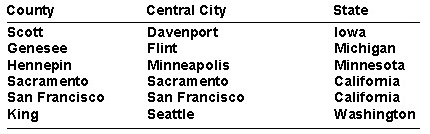
One site subsequently dropped out (Sacramento County), and four sites were added in 1992 and 1993:
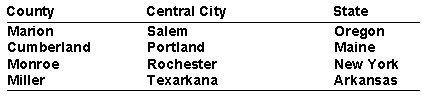
Although grants were initially awarded for three years, most sites conserved their funds and extended their grant periods by a year or more. Grant funds were used by the demonstration sites for staff salaries, office rental, consultant payments, and other operational expenses.
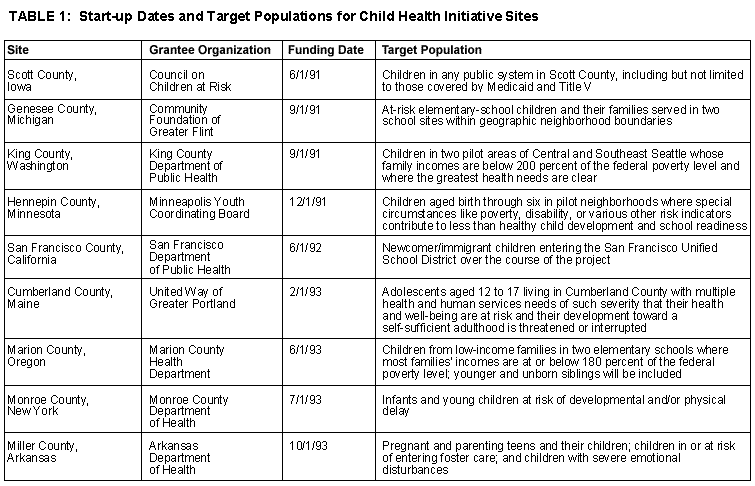
The communities selected as demonstration sites varied on a number of important characteristics, including the types of organizations issued the grants and the composition of the target populations. The awards were made to local governments (Scott, Marion, Monroe, San Francisco, and King Counties), a state government (Miller County), nonprofit community organizations (Genesee and Cumberland Counties), and an intergovernmental organization formed under a joint powers agreement in one case (Hennepin County). In keeping with Foundation directives, the target population at each site was broadly defined to include children with multiple health needs who were dependent on public programs for meeting their health needs. However, the target populations differed considerably in demographic and socioeconomic characteristics, as shown in table 1. For example, some focused on infants, some on elementary-school-aged children, and others on adolescents. The scope of the projects varied: some included almost all children in the community, whereas others concentrated on specific subpopulations like immigrant children or adolescents with severe emotional problems.
Following its usual practice for national demonstration initiatives, the Foundation established a national program office and a national advisory committee to oversee the Child Health Initiative. The national program office was created to administer the demonstration grants and provide guidance to the sites.
Evaluation Methods
In addition to providing funding for the demonstration sites and a national program office, the Foundation contracted with the University of California, San Francisco, to conduct a formative evaluation of the Initiative. Under this arrangement, each community was evaluated in terms of both its ability to design and implement a successful model for a target population and its potential to extend the pilot to other children in that community. The evaluation focused on design and implementation, and it emphasized the identification of factors that contributed to - or hindered - the success of the model.
The evaluation was structured around two site visits and periodic telephone interviews with each site over the three-year grant period. The first visit was designed to collect baseline information after completion of planning but before the project components were set into motion. A second contact, occurring midway through the grantee's project period, provided a midterm assessment of progress in implementing the three components, and it was conducted through extensive telephone interviews at most sites. The final site visit served as an endpoint for assessing the degree to which sites had successfully implemented their projects and for drawing lessons that could be presented to policy makers and practitioners.
Data collection methods included structured and semistructured in-person and telephone interviews with project staff and other key informants; observation of program operations; and review of the original proposals, periodic progress reports, records, and other program documents. Although the primary sources of data were the grantee organization and the project staff, data were also collected through interviews of persons related to but not employed by the project, such as community members, local foundations, advisory board members, health care providers, and government officials. Typically, interviews were conducted with a dozen or more key informants during each site visit.
In sum, the evaluation of the demonstration project was intended to assess the process of designing and implementing the nine demonstration projects and to identify characteristics of the projects that facilitated or created barriers to achieving the goals of the Initiative. At the Foundation's request, we paid special attention to evaluating the centerpiece of the demonstration project - the decategorization component. The results from our evaluation of that component are presented here; more general results from the demonstration are summarized elsewhere (Newacheck et al. 1995).
We defined decategorization as the process of removing restrictions on the use of categorical program funds so that those funds might be used to finance services based on children's needs rather than being allocated according to program requirements. From an operational perspective, we used three criteria to assess whether demonstration sites had successfully carried out this directive:
- the creation of a flexible pool of funds comprising monies derived from categorical programs
- the existence of written agreements indicating that restrictions on the use of categorical program funds had been removed
- evidence that the flexible pool of funds was used to purchase services that could not have been purchased by the separate categorical programs
Findings
Under the decategorization component of the Child Health Initiative, each demonstration site was expected to create an operational pool of flexible funds composed of monies derived from categorical programs. None of the demonstration sites was able to attain this goal during our five-year evaluation. In fact, only one of the sites made significant progress in decategorizing funds consistent with our criteria. The remaining demonstration sites experienced varying degrees of success in creating flexible pools of funds using mechanisms other than decategorization.
The sites primarily used three mechanisms to create flexible pools of funds. All of the sites were able to create small pools of flexible funds based on voluntary contributions or local discretionary funds. A second strategy employed by several sites was to use dollars derived from the capture of additional federal Medicaid matching funds. Only one site embarked on a deliberate strategy to decategorize multiple categorical funding streams at both the state and federal level in order to integrate services more fully at the local level.
The creation of small pools of flexible funds based on local discretionary monies has long been a favored funding mechanism for launching new community-based initiatives. As applied in this demonstration, the strategy involved obtaining and pooling voluntary contributions from community institutions (United Way agencies, local hospitals, and philanthropic organizations, to name a few) and/or discretionary funds from willing local government agencies. Because the target populations in most of the demonstration projects were limited in size, these small pools of flexible funds were quite useful. Oftentimes they provided all of the funds necessary to expand services for the target population. Thus, many sites had little added incentive either to go beyond these small pools or to deal with the frictional costs that would result from true decategorization.
As the Child Health Initiative evolved, the sites discovered other funding mechanisms that could be used either to supplement existing flexible revenue pools or to create new ones. Consultants hired by the national program office to assist the sites were highly adept at devising strategies to capture additional federal funds from the Medicaid program. Capitalizing on these strategies, several sites were able to garner new monies that could be used flexibly to meet the needs of children in their target populations.
Although this technical assistance provided the sites with useful and welcome information, it mistakenly led many to believe that the Foundation intended them to maximize federal Medicaid dollars rather than to attempt decategorization. In fact, since the newly found dollars could be used in a flexible fashion, some sites saw this as a mechanism for meeting the Foundation's objective of creating a flexible pool of funds. Thus, using creative Medicaid financing, several sites were able to generate pools of relatively flexible dollars without threatening existing categorical programs or their constituencies.
Of the nine demonstration communities, only one site - Monroe County - has come close to developing an operational approach to decategorization based on our criteria. Although Monroe County had made considerable headway at the time of this writing, it had not yet operationalized a decategorized funding mechanism. Nevertheless, the experience of Monroe County illustrates the challenges that a community must confront in order to decategorize programs. That experience also reveals important clues about the elements that must be in place to position a community for success. Monroe County targeted selected categorical funds that were administered through the county health department. This tactic offered a built-in advantage because the demonstration project grantee was the county health department, and the project director was the director of the health department. The target population was at-risk pregnant women and infants who depended on publicly funded services. Consequently, the health department focused on decategorizing programs that were designed to improve the outcomes of young families, such as supplemental nutrition programs, immunizations, lead screening, and early intervention services for high-risk and developmentally disabled infants. The goal was to use decategorized funds to create a "comprehensive and seamless system of care for children and their families" (New York State Department of Health 1996).
Through a series of internal meetings and administrative changes, the Monroe County Health Department took steps to coordinate these various programs. The health department also examined ways in which its internal budgeting process could be altered to allow the funds to be pooled if the needed authorization from state and federal agencies was obtained. This process was facilitated through the strong commitment and active leadership of the county health director.
Limited progress in enlisting support at the state level occurred under New York's Democratic governor. However, the election of a Republican governor in 1994 and the appointment of new cabinet-level agency directors changed the fortunes of Monroe County in a dramatic fashion. Under the new governor, the New York State Department of Health embraced decategorization and dedicated substantial staff time to developing the necessary administrative mechanisms to facilitate the process. An important step in achieving its goal was the initiation of negotiations with federal authorities to waive restrictive categorical requirements. This effort was facilitated by consultants who were retained by Monroe County and who were exceptionally well versed in state government fiscal and programmatic matters.
Several months of negotiations ensued with federal agencies: the Department of Health and Human Services (DHHS) (for immunization outreach funds from the Centers for Disease Control and Prevention, funds from the Preventive Health Services Block Grant, and funds from the Maternal and Child Health Services Block Grant); the Department of Agriculture (USDA) (for funds from the Special Supplemental Food Program for Women, Infants and Children [WIC]); and the Department of Education (for funds from early intervention services under Part H of the Individuals with Disabilities Education Act). In general, the agencies were very supportive, although the USDA showed less enthusiasm than the others. USDA's principal reservation concerned the issue of fiscal accountability under regulations issued by the federal Office of Management and Budget. After a flurry of negotiations and letters from the New York State congressional delegation, the federal agencies signaled their willingness to move forward by referring the issue to the federal regional administrators responsible for New York State. A meeting among the regional administrators for DHHS, USDA, and the Department of Education in November of 1996 led to a request that the National Performance Review consider the state of New York's request to decategorize federal program funds. At the time of this writing, the state of New York and the federal government were still working to develop a cost-accounting mechanism that will satisfy all parties, but all indications are that this will be completed over the next year. Therefore, the final hurdle at the federal level has been partially overcome, but it is too soon to judge whether the current negotiations will result in Monroe County being authorized to decategorize its programs completely.
Discussion
The minimal progress among the demonstration sites in achieving decategorization can best be understood in the context of three general themes:
- the degree to which sites were clear about the purpose of decategorization
- the degree to which sites were successful in achieving high-level political support, both locally and at higher levels of government
- the extent to which sufficient time was available for designing and accomplishing decategorization strategies
Each of these themes is discussed below.
Attaining Clarity of Purpose
A first step in designing and implementing a major funding and administrative change is to ensure that the underlying concept is clearly grasped and that all parties understand what is entailed in accomplishing the goal. Unlike the care coordination and monitoring components of this demonstration, for which there was considerable experience and a rich literature, there were no working models of decategorization in the child health field. Without previous experience to rely on, sites had difficulty translating the concept into operational terms. For example, even after a full year of operation, most sites were unclear about the categorical programs to be targeted, about the identity of the authority from whom permission was needed to decategorize programs, and about which accounting, administrative, and legal structures were needed to create a vessel for decategorized funds.
An absence of clear guidance from the Foundation and the original national program office during the critical early stages of the Initiative contributed to the local difficulties in designing decategorization projects. This lack of clarity was at least partly due to the comparatively unstructured approach used to select and administer the demonstration grants. Unlike most Robert Wood Johnson Foundation initiatives, the Child Health Initiative adopted an informal process to identify sites thought to be equipped for such an undertaking. No formal documents were prepared to describe the purpose of the Initiative or expectations of the projects, except for letters to the sites before and after they were awarded grants. Proposals approved by the Foundation often contained vague or undefined plans for achieving decategorization.
These early problems were exacerbated by delays in the start-up of the national program office and a subsequent change in staff and leadership near the midpoint of the project. The slow start-up meant that the first round of demonstration sites (those funded in 1991) had no technical assistance during the critical early months of the Initiative. About midway into the project, a change in leadership curtailed activities of the national program office for several months. Additional time was required while the new staff became familiar with the project, leaving the sites again largely without daily guidance. Although unpredictable and largely unavoidable, changes in staffing created an information vacuum and left grant recipients unsure of how to proceed.
Gaining Needed Political Support
Achieving decategorization requires winning the support of a full spectrum of players, including those with authority to grant needed exemptions or waivers for categorical programs. It is not enough to garner local backing for the idea and acceptance of the plan. Authority to remove categorical restrictions from most child health programs (e.g., Medicaid, Title V Maternal and Child Health programs) rests at the state and federal levels. Consequently, this process of gaining acceptance and building support must be repeated at every level of government. However, attempts to achieve decategorization in this demonstration project were largely confined to the local level.
Even at the local level, sites often found that needed cooperation was not forthcoming. Indeed, complaints regarding turf and control issues were frequently reported during site visits. Program officials were often concerned that they would find themselves pitted against their own colleagues in a competition for client service dollars. Professionals whose agencies were organized to deliver services in response to categorical needs (e.g., to respond to a certain health problem) required assurance that their clients would continue to receive special consideration when funds were decategorized. They had to be reassured as well that decategorization would not result in a loss of program accountability.
Similarly, most sites found it difficult to make a compelling enough case for the fiscal and administrative changes that decategorization requires. Although the grantees may have embraced the concept of decategorization, they often found it difficult to convince critical local stakeholders of its necessity. Needed partners were skeptical about the benefits of decategorization, viewing it as an untested and abstract concept.
Some sites were able to garner the support required at the local level but were unable to obtain the necessary backing at the state or federal level. Obtaining authority for decategorizing state and federal funding streams depended on the development of strong links between local project staff and the state and federal level policy makers with authority over the programs in question. At the time of our final visits, most sites had enlisted only limited support for decategorization at the state level and had achieved virtually none at the federal level.
Availability of Adequate Time for Design and Implementation
In hindsight, it is clear that accomplishing decategorization requires considerable time and a minimum of distractions. Given the complexity of the task, the original three-year demonstration period envisioned by the Foundation was unrealistic. In fact, most of the sites were operational for at least five years and saw most of their limited progress occur at the tail end of that period. Monroe County, which has continued its project well beyond the original time frame, is in the final stages of negotiating a plan with the federal government that will allow it to integrate all of its funding from various categorical programs by the year 2000 - seven years after the project began.
External forces and circumstances, including changes in state policy, contributed to slower than anticipated progress in achieving decategorization. Specifically, this effort at decategorization was attempted during a time when the health care landscape was undergoing major change. The rapid and widespread adoption of Medicaid managed care by virtually all of the states represented in the Child Health Initiative, as well as the passage of state health care reform measures in selected states, complicated decategorization efforts by distracting the sites and by infusing uncertainty and caution among potential partners.
Lessons from the Child Health Initiative
The Robert Wood Johnson Foundation's Child Health Initiative was launched in 1991 to test the feasibility of improving access to children's health care through decategorized funding. The demonstration sites confronted a number of challenges in designing and implementing decategorization strategies: an absence of existing models and of effective technical assistance; political difficulties in gaining cooperation from multiple local service agencies; limited progress in obtaining cooperation from state and federal agencies with authority over categorical programs; difficulties in implementing major programmatic changes when the health care system itself was undergoing rapid change; and sometimes unclear messages from the Foundation and its representatives concerning the objectives of this demonstration. In combination, these barriers proved to be largely insurmountable during the five-year initiative. It did, however, provide several important lessons that may be useful in the design of future decategorization experiments:
Good communication and clarity of purpose is an important first step. All of the relevant participants must have a clear, consistent understanding of the demonstration concept and its application. In the case of the Child Health Initiative, each of the players - the Foundation, the national program office, the technical consultants, and the sites - differed in their understanding of the decategorization concept and how it was to be implemented. Clarity is particularly important when there is little common experience to draw upon. The early development of a framework articulating objectives and goals, essential concepts, and testable models would provide a useful starting point for future demonstration initiatives. So too would the use of interim benchmarks to assess progress in accomplishing goals and objectives. Such benchmarks would also be useful in providing an early warning of problems.
High-level political support is necessary to achieve decategorization. Decategorization requires the political commitment of leaders at all levels of government. With the exception of Monroe County, none of the demonstration sites was able to develop the links to state and federal policy makers required for achieving decategorization. In the case of Monroe County, the intervention of a newly elected governor and his staff was the catalyst for a significant leap forward. In hindsight, given the difficulties faced by localities in creating political links with high-level state and federal policy makers, it was probably a mistake to limit this initiative to the local level. Indeed, placing the responsibility to achieve decategorization at the local level without establishing connections to state and federal policy makers and insuring their commitment worked to the distinct disadvantage of the sites. Future attempts at decategorization might benefit from using a "top-down" strategy rather than the "bottom-up" approach used in the current initiative. That is, a decategorization initiative would begin at the federal or state level, where the authority to grant needed waivers and exemptions rests, and work down to the community level. A demonstration initiative that targeted all three levels of government simultaneously would have an even greater chance of success.
Implementing decategorization requires a substantial time commitment. Designing and implementing decategorization at the community level is clearly a difficult undertaking. Considerable care and time are needed to develop workable models, to build sufficient trust and cooperation among the local partners, and to establish the needed links with state and federal policy makers. Although breakthroughs can occur, as in the case of Monroe County, the overall experience of the demonstration communities is that three years, or even five years, is not enough time to design and implement decategorization at the local level. It is noteworthy that a similar initiative by the Annie E. Casey Foundation, which committed itself to far more financial support, reached a similar conclusion (Annie E. Casey Foundation 1995).
Conclusion
The absence of clear progress in implementing decategorization under the Child Health Initiative should not be taken as a disaffirmation of the concept. Indeed, in our view, the Initiative did not provide an adequate test of the feasibility of implementing decategorization at the local level. Whether decategorization of health dollars has positive, negative, or mixed effects on outcomes for children remains to be determined. The proposition that decategorization holds promise as a tool for achieving heightened program effectiveness and efficiency, and thus the possibility of producing measurably better outcomes for children dependent on public programs, deserves further investigation.